
Bloqueo
I am witnessing the effects of the United States' energy blockade on the lives of innocent Cubans

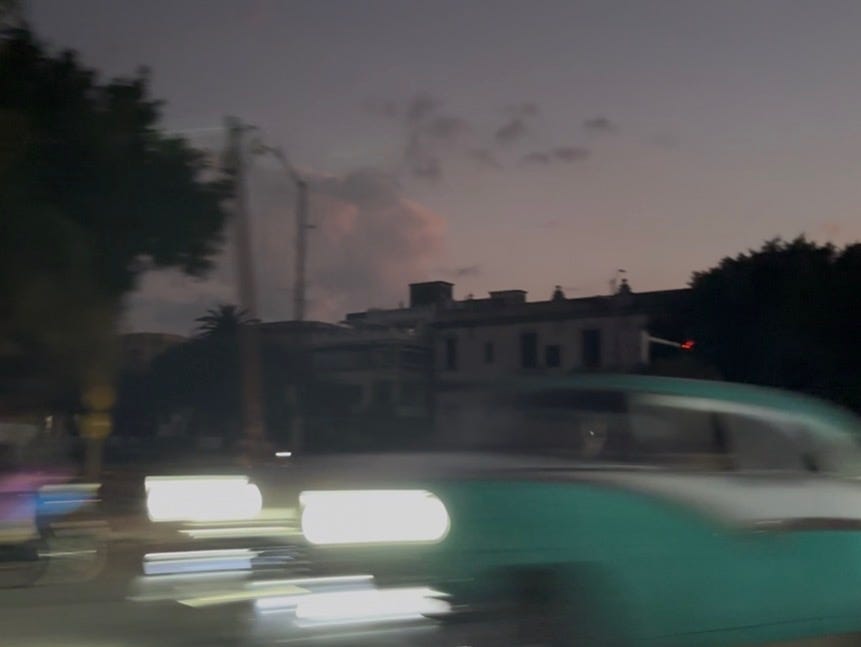
I leave for Cuba two days before Valentine’s Day, feeling as if I’ve been holding my breath for weeks as the island’s isolation from the rest of the world intensified in the wake of U.S. tariff threats and tanker seizures that have effectively blocked Cuba from receiving shipments of foreign oil.
Just days before my scheduled departure, Cuba announced that it no longer had the ability to provide jet fuel at its airports. A few days later, all Canadian airlines that serve Cuba abruptly announced - one after the other, within a single day - that they were pausing service to the island. Empty planes flew to Cuba to repatriate Canadian citizens, who make up the overwhelming majority of foreign visitors to Cuba. Canadians who weren’t willing to leave on a scheduled evacuation flight had to arrange departures through third countries at their own expense.
Cuba is only ninety miles from the Florida coast. U.S. airplanes do not need to refuel there before returning. Still, I had checked my airline’s app multiple times a day leading up to my trip to confirm that my flight wasn’t canceled.
I check one last time at midnight before the day of my departure, just before forcing myself to close my eyes for two sleepless hours ahead of my 3 a.m. taxi. I can’t exhale until my suitcases are tagged and placed on the conveyor belt at the airport.
My journey is uneventful. My bags are released in Havana in record time. I scan the crowd as I exit the terminal, searching not just for my husband, but also for signs of the rapidly escalating fuel crisis.
At first, things appear almost normal. If Jesus hadn’t secured transportation for me days earlier, I would have had no difficulty finding a ride into the city. There are still plenty of drivers vying for arriving passengers’ attention – not quite as many as usual, but more than enough to meet demand. Only when our taxi, driven by our regular driver, Ernesto, pulls onto the highway do I begin to see evidence of just how much things have changed since I left Cuba four and a half weeks earlier.
It isn’t just the lack of traffic on the main highway, although the absence of other vehicles is eerily obvious. I see almost no activity at the fruit and vegetable stands along the side of the road. No vendors selling Spanish peanuts in tightly rolled paper cones to passing cars. Hardly any people waiting for rides. Just…stillness.
On the fourth day of my previous trip to Cuba, the United States removed Venezuela’s president by force. Thirty-two Cubans – and over a hundred people in total – were reportedly killed as a result of that action. Cuba’s supply of Venezuelan oil was immediately and completely cut off.
Mexico had surpassed Venezuela as Cuba’s main supplier of oil in the previous year, but in the weeks that followed the termination of Venezuelan oil shipments to Cuba, the United states initiated what amounts to a total blockade on the island’s fuel supply – although the U.S. government has avoided using that word.
As of my arrival in Cuba on February 12, the country had received no shipments of fuel since January 9, when the Ocean Mariner delivered Mexican oil to Havana during my last visit.
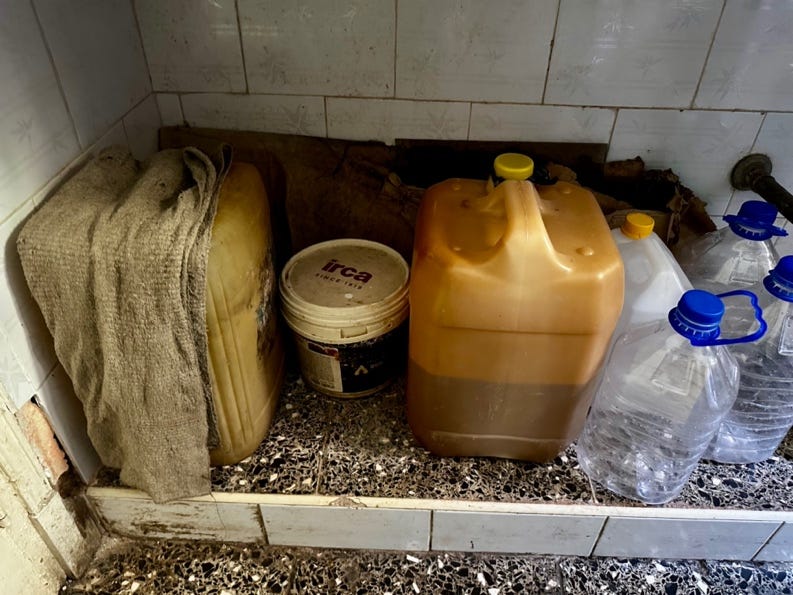
A solar power system was installed on our house in Cojimar the week before my trip. Jesus wanted to wait until I arrived, but I didn’t want to hesitate. I was concerned that the intensification of U.S. sanctions would increase cost and reduce availability of solar systems.
My only regret about the swiftness with which we moved forward was that I didn’t get to see the installation as it was happening. Jesus sent pictures, but it wasn’t the same as watching it in person.
As soon as my suitcases are carried up the stairs, I tell Jesus I want to see the panels.
Cubans use every bit of space in their homes, including their flat roofs. Jesus frequently ascends the treacherous spiral staircase behind our bedroom to hang laundry on the line above, fill the red tank that holds half of the house’s water supply, or simply enjoy the view of the sea while the sun is setting.
I have never climbed to the top of our house before. Each spiraling step extends just eighteen inches from the staircase’s center pole, and there is no railing. It takes me twice as long as Jesus to make it up the stairs.
When I step onto the roof I am surprised how much difference eight vertical feet make in terms of the view; the sea, just a few blocks away but mostly obscured by the neighbors’ trees when looking out from our balcony, is now visible in panoramic glory.
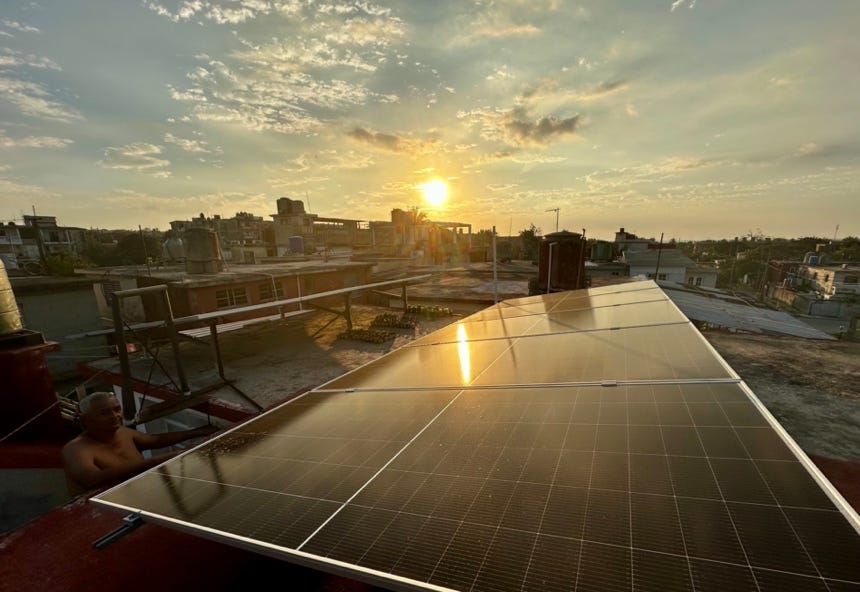
But the panels are what I braved the staircase to see. They are invisible from the street, and only a corner of one row can be glimpsed above the landing outside our back door. I need to see the whole setup with my own eyes to know it is real: two rows of panels, four sections in one and five in the other, aligned with the edge of the roof at the back of the house, angled toward the equator.
Jesus and I wrap our arms around each other and stare and stare at them, speechless, trying to comprehend the magnitude of the triumph they represent.
Later, sitting in the front bedroom, I hear the four giant batteries in the corner opposite the bed humming as they begin to recharge. The batteries sit under a wall-mounted inverter, which seamlessly shifts the house’s power source from street, to solar panels, to batteries as necessary throughout the day.
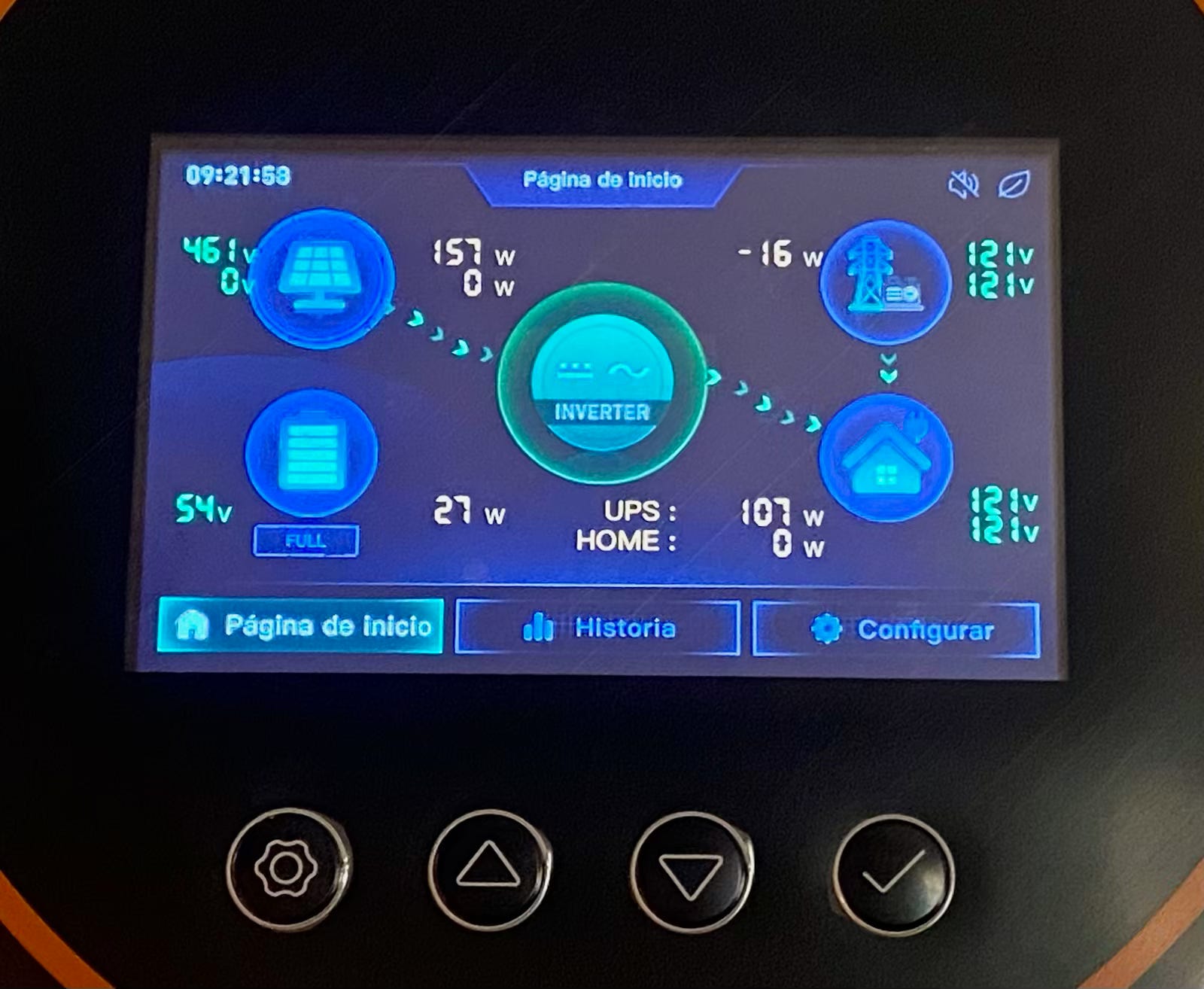
I’ve been obsessively checking the battery level, which is displayed on a throbbing aqua-colored monitor attached to the wall next to the inverter, since I arrived. So far it hasn’t dipped below 50%. Jesus’s brother, Julio, ascends the back stairs almost every day just to study the system’s displays and watch the lights on the batteries blink as they charge. Every time Jesus catches one of us tapping the touchscreen on the inverter to see how much power is coming from each source, he teases us and calls the system tu jugete (your toy).
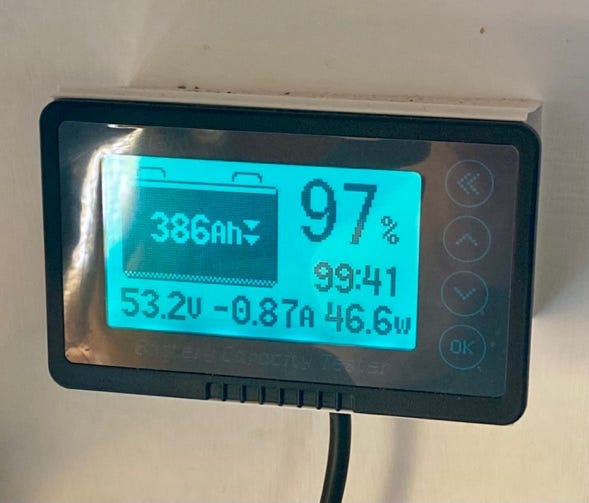
The batteries and inverter dominate a large space in the corner of the small room, but it was worth it. Thanks to the generosity and assistance of numerous family members, friends, and acquaintances, we were able to fully transition our house to solar power - just as the fuel crisis began to squeeze Cuba with maximum intensity.
I had felt the change in the mood in the house as soon as I arrived. Julio and my father-in-law greeted me with the biggest smiles I’ve ever seen from them, telling me how much peace and tranquility it brought them knowing they had electricity all the time.
Julio hadn’t believed the project really would happen until the morning of the installation – which, incredibly, was completed in a single day, on my father-in-law’s birthday. No electricity in the morning. By evening, electricity virtually guaranteed, 24/7. Jesus had told me that his father cried on the day of the installation when he saw the equipment being unloaded into the yard.
I was overwhelmed by a pang of sadness at Jesus’s words as I thought about his mother, who has been gone almost exactly a year. She was dependent on oxygen in the weeks before she died, and although her sister had brought a gas-powered generator for her oxygen tank, she was never free from worry about fuel availability and power outages. She never knew whether she would have light in her home when she needed it, whether she would be able to watch television when all she could do was lie on the couch.
How I wish she had seen the panels installed on her house so she could have lived without the constant fear of blackouts.
The fuel crisis has created a ripple effect on life in Cuba. The absence of tourists has forced the closure of many resorts, with staff laid off at least temporarily. Local buses are no longer running, leaving people who still have jobs or otherwise need transport to hope they can snag a ride in one of the few vehicles passing by on the mostly empty roads.
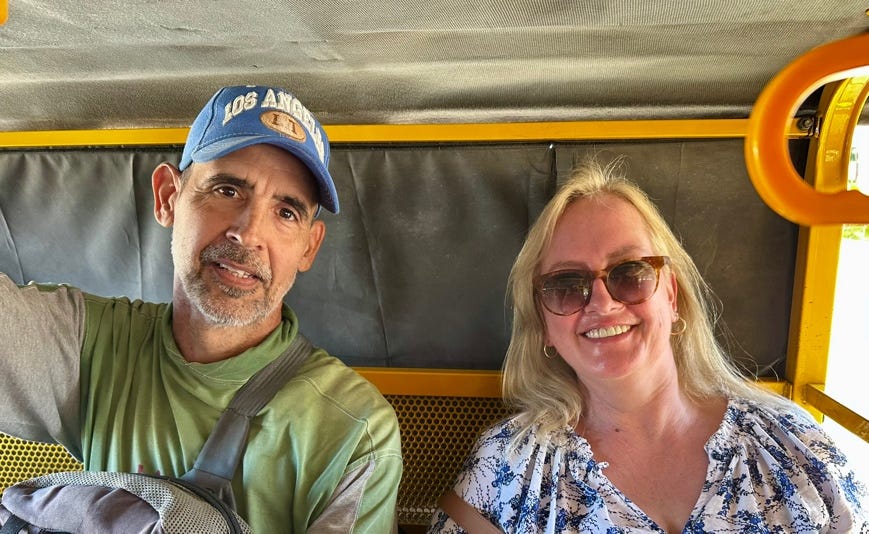
Electric tricycles with carts on the back have picked up some of the slack. Their double benches can hold four to eight people, depending on the design of the vehicle and how determined people are to squeeze in, but they can’t begin to meet the need for everyone who requires transportation.
Supply chains have been impacted. One of the island’s largest private delivery services, which had provided an essential lifeline for friends and families abroad to send support throughout Cuba, made the decision to restrict their operations to the Havana area right after I arrived. Days later, they paused all deliveries indefinitely.
But the effects are not limited to transportation or the movement of goods. Cuban schools have transitioned to providing instruction four days per week instead of five. Hospitals are limited to meeting only the most essential needs. Water supply, which was already unpredictable, has become even more of an issue given that the delivery of water to the cisterns of Cuban homes requires electricity. Garbage pickup, already intermittent at best, has been drastically reduced in some areas. People have resorted to burning the trash that piles up on street corners, producing smoke I know must be toxic.
There is a shrug and a facial expression I consistently see from Cubans when they talk about their struggles. It seems to say: it’s just the next thing.
Ernesto arrives at our house before 9 a.m. to take Jesus, Julio, and me into Havana to go shopping. Our plan is to buy some bread and pastries, food for Julio’s birds, and hopefully the vanilla Jesus needs for the delicious flan and bread pudding he frequently makes for family and friends. We are ten minutes’ drive from the tunnel under the harbor and into the city, but a typical shopping trip takes two or three hours.
Jesus carries a large bag that contains two fish he bought for our other driver and friend, Rey, who is recovering from serious injuries sustained in an accident on his motorcycle. The bike hit one of the potholes that are ubiquitous in Cuban streets, throwing him into the handlebars and breaking several ribs.
Rey’s diabetes has complicated his recovery, and the reduction of healthcare services has made it more difficult for him to get the care he needs. The accident occurred during my previous trip to Cuba in early January. Rey has been recovering at home ever since, unable to drive his taxi, unable to go out looking for gas.
Jesus has never been to Rey’s house before. He gives Ernesto the address, and we drive to Centro Habana and knock on the door of a house that displays the number Rey provided.
The woman who answers the door tells us that the address, which appears to be on her wall, actually belongs to the house next to her, the one with a tiny cafeteria in its front room. Like many Cubans, Rey’s wife maintains this business in her home to make extra money, selling a few small food items and miniature cups of coffee for 20 Cuban pesos each. She takes in about one U.S. dollar for every twenty-five cups of coffee she sells, and that doesn’t account for the cost to her of purchasing coffee beans.
Once Rey’s wife understands who we are, she leads the three of us through the curtain that separates the front room from the rest of the house, up the narrow staircase to the second floor, which consists of two small bedrooms and a bathroom. The house has no balcony or yard, so clotheslines are strung across the length of the landing at the top of the stairs.
Rey emerges from the bedroom with his left arm bent at a right angle, held close to his side. It didn’t occur to me that he might need a sling. I would have brought one had I known. He looks different in this context, without his glasses and professional demeanor. He smiles when he sees us, but his eyes betray stress or pain, I can’t tell which. Maybe both. Probably both.
The three of them chat for a few minutes while I listen. When the accident happened Jesus didn’t want to tell me how serious Rey’s injuries were with his health complications, but I could tell from the way he shrugged a little too casually and looked away from me when he spoke.
As I listen to the conversation I wonder how Rey’s wife is managing on her own while he recovers, how they’re surviving without his income, how she’s handling all of the responsibilities of finding, preparing, and managing storage of food on her own, running her business, doing all the laundry by herself, and taking care of her husband – all while navigating the blackouts that come every day, often at unpredictable times.
But really, I already know the answer, because with each new challenge that comes, Cubans adapt and carry on. It isn’t that they don’t have feelings about it, or that it isn’t incredibly difficult, but there is a shrug and a facial expression I consistently see from Cubans when they talk about their challenges. It seems to say: it’s just the next thing.
In order to manage the distribution of the small amount of available fuel and limit the time people spend waiting in line, the Cuban government has instituted a ticket system via an online app. Fuel is sold by appointment only, with a limit of 20 liters per fill. While the price for petrol at Cuban gas stations is around $1.30 U.S. dollars (USD) per liter, prices on the informal market have reportedly risen as high as $4,000 Cuban pesos (CUP) per liter, or $8 USD at the current informal market exchange rate. A ride from Cojimar into the Vedado neighborhood of Havana, where many popular restaurants are located, cost around $3,000 CUP the last time I was in Cuba. The cost has now risen to between $9,000 and $12,000 CUP, depending on the time of day.
Since I arrived we have been able to get around when we wanted to, partly because Jesus always treats people well and shares whatever he has. He has built a lot of good will, which is now being returned to us. Ernesto prioritizes our requests. Although we are now paying him in U.S. dollars rather than Cuban pesos, he hasn’t raised what he charges us as much as some other drivers reportedly have.
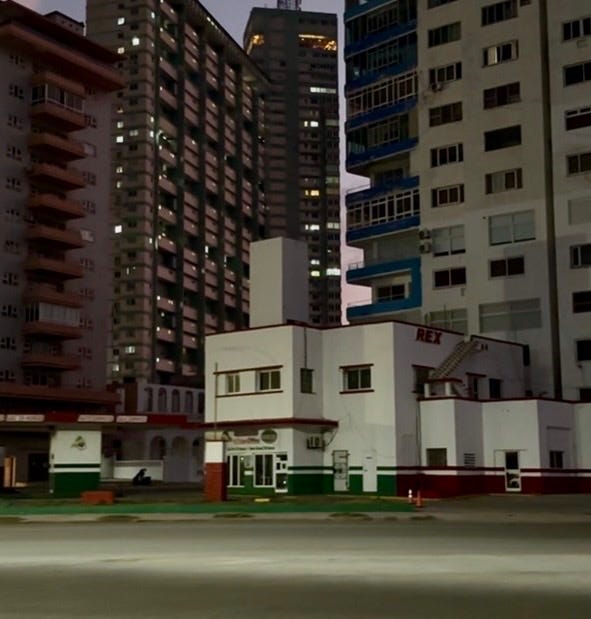
We are in the back of Ernesto’s taxi on our way to one of our favorite restaurants in the neighborhood of Miramar. To get there we drive the entire length of Havana’s famous Malecón, through zones where bright lights illuminate the empty streets and through others where darkness stretches for blocks and blocks, interrupted by the occasional rechargeable light from inside a home or fire glowing on the street where someone is preparing dinner.
The restaurant has backup power, but the lights are on in the neighborhood when we arrive. The prices, which are listed in local currency, have doubled compared to our first visit two years ago. Demand for U.S. dollars along with other economic pressures have driven extreme inflation in Cuban currency in recent years. This has little impact on visitors, but the impact to Cubans is devastating.
My favorite dish at this restaurant cost $3,000 CUP two years ago, or about $12 USD based on the exchange rate at the time. Tonight, it costs $6,000 CUP – or about $12 USD.
For the first time since we started coming to this restaurant, my husband is the only Cuban dining here tonight.
As our main dishes are delivered we are joined by a single other diner, a foreigner who reads a book at her table on the other side of the restaurant as she eats her dinner. A couple, whose language I can’t discern later when we walk past as we’re leaving, eventually arrives and sits outside on the patio. The rest of the restaurant’s fourteen or so tables remain empty.
When we pay the tab, which is still easily less than a third of what I would have paid for a similar meal in Chicago, our server comes back and tries to return the tip to us even after we tell her we don’t need any change. It is the third time in four nights that a server has tried to insist on returning their tip.
Before the current crisis was imposed, a major initiative to establish energy sovereignty was already underway in Cuba. More than thirty massive solar fields have been constructed using materials donated by China and other nations. The Cuban government recently announced that it has installed solar power systems on businesses and private homes throughout Cuba – benefiting hundreds of hospitals, nursing homes, maternity wards, and government buildings as well as thousands of educators, people living in isolated areas, and elderly people and children who rely on electricity for health reasons. Cuba now produces 38% of its energy consumption via solar power during peak daylight hours.
With each passing day, Cuba’s capacity to harness energy from the sun is increasing. The Let Cuba Live campaign and others are collecting donations to support the effort.
This country is betting its future on renewable energy, and will likely exceed its original goal of achieving 24% renewable energy by 2030, and 100% energy sovereignty by 2050.1
I have read many widely varying opinions on whether Cuba’s energy sovereignty goals can be met. My personal opinion is that anyone who doubts that it’s possible doesn’t know how much quiet determination exists in Cuba.
Jesus and I are walking down the street outside our house in near-total darkness, on our way to a popular local restaurant a few blocks away. A tiny sliver of moon hovers just over the outline of the houses in front of us, surrounded by thousands of brightly visible stars.
The sidewalk in most places is too narrow for both of us, so we walk in the empty street. I hold Jesus’s hand and rely on him to steer me away from obstacles in our path. He has the locations of many of the potholes in the neighborhood memorized.
We pass a single house with windows illuminated from within, but I can’t tell if they have panels or are relying on rechargeable lights. Now and then an almost-silent electric vehicle hums by, and occasionally a gas-powered motorcycle or ancient classic car.
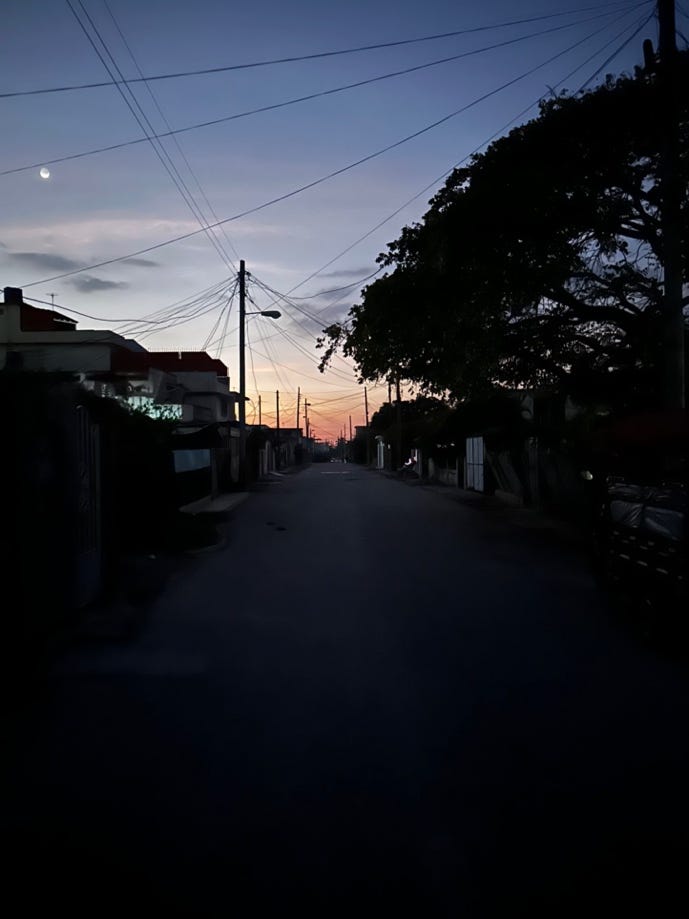
As we were leaving for the evening, we walked past Jesus’s family members eating outside together in the portal at the front of the house by the light of a single rechargeable lantern. The outside lights do not go on when the neighborhood is in blackout, so as not to draw undue attention.
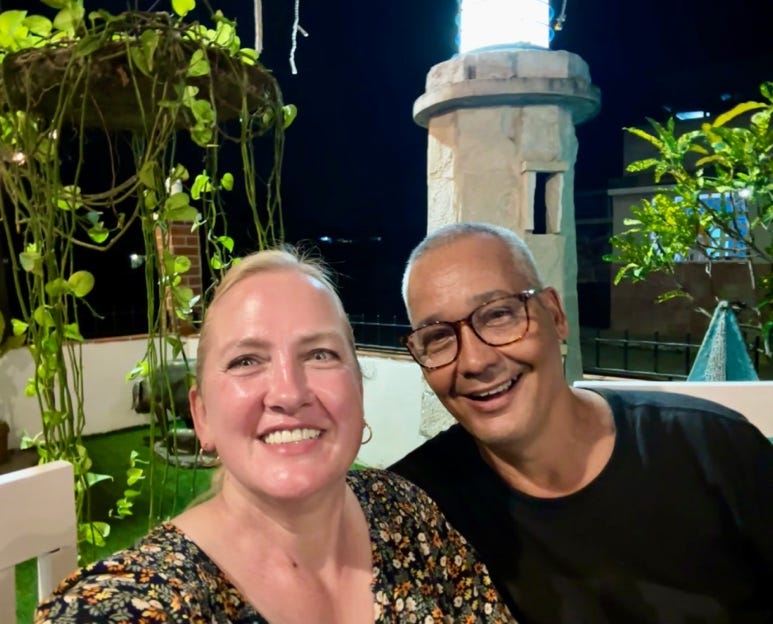
We round a final corner and see the rotating light of a miniature concrete lighthouse in front of the sea-themed restaurant, an oasis of electricity in a desert of darkness. Strings of LCD lights hang around the entire perimeter of the outdoor dining area. All the lantern-shaped lamps are lit. Fans are humming.
We are seated at the table next to the lighthouse, near the massive outdoor oven where dishes are prepared over fire, al carbón. Our server informs us that the restaurant’s panels can’t power the fryer, so some of the items on the menu aren’t available. As she is running down the list, we all simultaneously exclaim as we notice lights suddenly springing to life all around us. Nos salvamos, Jesus says, grinning as he tells the server to add an eperlan de pescado (fried fish strip appetizer) to our order.
When we arrive at home the house is illuminated, the batteries once again humming, the monitor inching back up toward 100% in anticipation of the next blackout.
If you would like to make a small one-time donation to support my work, please click below. Every little bit helps and is greatly appreciated!
Sources: https://www.peoplesworld.org/article/cuba-resists-sovereignty-under-the-boot-of-u-s-imperialism/
https://www.minem.gob.cu/en/goals-and-indicators
https://pvonline.ca/2024/02/08/cuba-commits-to-29-green-electricity-in-six-years-100-by-2050/
*fields, not panels.
I was wondering if Cuba was working to put up solar panels. I'm glad they are. And from every single story you have written and our personal conversations, I believe Cuba will meet their expectations on solar energy. Cubans strength and persistence despite everything they go through has never wavered. I have gathered that since you started sharing your stories of Cuba and it's people with me.