

Historia, Part 2
the rest of our backstory

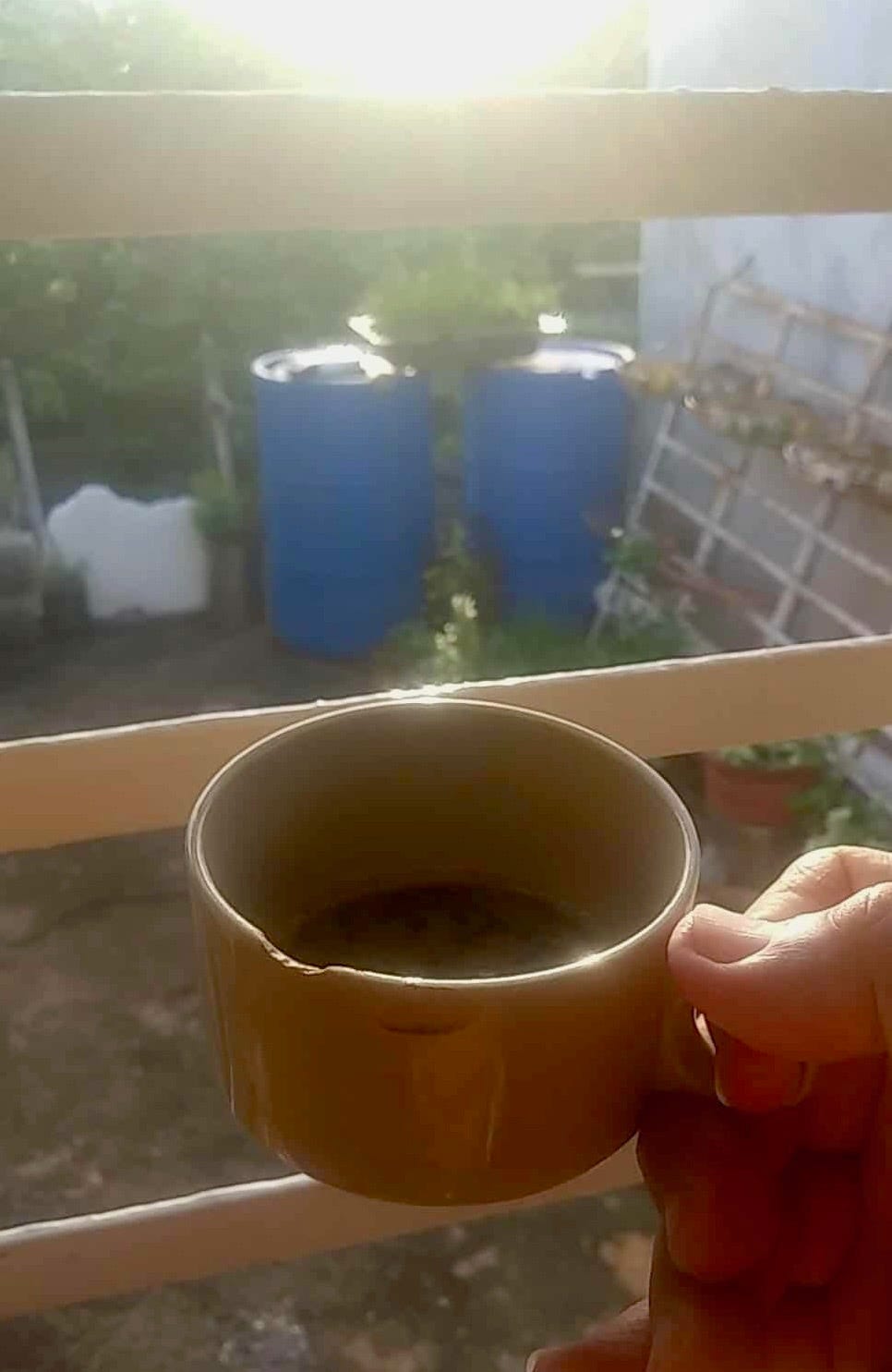
Every morning I texted Jesús buenos días, amigo and waited for him to respond with chinchin and a photo of his chipped coffee cup against the blinding Cuban sunlight beyond the metal frame of his kitchen window. He had other cups, but he told me the one with a chunk missing from its rim was his favorite.
Jesús had started this daily ritual of toasting each other remotely with our coffee weeks earlier, and my phone was filled with shots of my Yeti against the backdrop of the city and lake from every window in my living room. We greeted each other this way every day, continuing to type messages back and forth until one of us had to turn our attention to something in our own separate reality. Around noon he would send me photos of the day’s garden tour, if there was one, and another chinchin photo, this time with Irene also raising a cup of coffee to the camera.
At night I sought out vacant corners of my cramped apartment or stayed up after everyone else had gone to bed, hoping Jesús would message me to ask about my day or tell me about the movie he was watching alone in the room that had belonged to his daughter. One night it was the film about the American woman who successfully swam from Cuba to Florida after decades of failed attempts. Another time it was the Fast and the Furious sequel that – unlike many movies supposedly set in Cuba – was actually filmed in Havana. We lingered on our phones until well past midnight, night after night.
I began to piece together images of Jesús’s childhood and family from the bits of information he dropped in conversation.
He had grown up in Havana before moving to the house he and his brother bought with their parents in Cojimar, where they had lived for over thirty years now. As a teenager he had been placed in a school for athletes, where he played basketball until eye surgery forced him to quit.
His father had a birthday in February. His mother was an expert seamstress and could sew anything for me. The aunt who now lived next door, disabled and mostly house-bound, was once a professor at the university across the street from the house in the Vedado neighborhood of Havana where I stayed on both of my previous trips. She had once written a book, and she offered to set aside a copy of it for me for when I returned.
We talked about my job, which was boring, and the office football pool, which was exciting. At first Jesús thought I was talking about soccer because I couldn’t find the right Spanish words to distinguish the world’s most popular sport from the U.S. version of football.
Finally, after some clumsy explanation on my part, he texted Amiga, lo entiendo, es futból de Rudy. Jesús was enthralled by my updates about each week’s games. He didn’t know a lot about Rudy football, but he preferred it over soccer for the physical contact and because he thought it required more strategy. I won a nice bit of money in the football pool that year. I told Jesús he was bringing me good luck.
When I went out for walks, Jesús always asked me if I was alone. At first I didn’t understand why, but later I realized it was because he worried about me walking around the city by myself. He frequently expressed concern about me being cold. It was winter in Cuba too, and when he shivered during the nights when the temperature dropped to 17 degrees Celsius, he couldn’t imagine living in a place where the thermometer lingered below freezing for months at a time.
When Chicago was hit with a week of polar vortex, the pond across the street from my building froze over completely and someone in the neighborhood cleared an impromptu hockey rink on its surface. I walked over one day with my kids and sent Jesús a photo of us standing, with the hockey players in the background, in the center of the pond.
Jesús’s daughter shipped a birthday package to me as a gift from both of them. When it arrived, I sent picture after picture of myself opening the box and using the items: a rose gold travel mug, a candle, a pair of fuzzy socks. I took a photo of the socks on my feet, my legs propped up on the fat ottoman in front of my favorite corner of the couch. My feet were always unbearably cold in winter. The socks were a perfect gift.
That night we talked so late that I fell asleep mid-text. I was reawakened by the vibration of my phone when Jesús messaged that he was going to bed and would talk to me in the morning. I quickly responded to let him know that I had nodded off without meaning to. I didn’t want him to think I had deliberately left without saying good night. He sent a laughing emoji and told me the socks were calcetines mágicos – magic socks – that had put me to sleep, and I should use them more often because I didn’t sleep enough.
The “magic socks” became a running joke whenever I mentioned feeling tired or stressed. Every night as our conversations wound down, Jesús told me to put my magic socks on and go to bed.
Electricity ran across the surface of my skin as I read his words, because I understood them. And because I understood them.
One late night several weeks later, after hours and hours of conversation throughout the day, Jesús made his usual joke about the socks. This time though, instead of saying good night and signing off, he elaborated: Aquí se llama también a lo Cubano medias. Here they are also called in the Cuban style medias.
Medias, he repeated.
Tú ahora me estas haciendo la media.
You now are making me the (other) sock.
Es otra frase hazme la media.
There is another saying, make me the other sock.
Éso lo que estamos juntos ahora los dos.
That is what we are together now, the two of us.
Haciendonos la media
Making each other the other sock.
Entendiste
Te fue claro eso
Did you understand? Was it clear to you?
My eyes, previously heavy, snapped open. Electricity ran across the surface of my skin as I read his words, because I understood them. And because I understood them.
Todos los días tú me haces la media con mi vida y tú corazón. Every day you make me the sock with my life and your heart.
Tú eres una media y yo soy otra media en cada momento del día. You are one sock and I am the other sock in each moment of the day.
Eres una hermosa media en mi vida. You are a beautiful sock in my life.
It was as if every cell in my body sprang to life in a singular instant. A rush of mutual understanding flowed between us, closing the distance that separated us. I read the words again and again, offering no response because none seemed adequate. I knew enough Spanish by then that I was able to read Jesús’s messages without translation, in their original form, in his voice, and they read like poetry. Eventually I texted back, me abrumas. You overwhelm me. He responded with a giant thumbs-up emoji.
My first husband and I had been talking about divorce for over two years. We had seen a marriage counselor briefly just before Covid. She fired us after we failed her assignment to go out on one date alone together. Our discussions about divorce were in terms of “when,” not “if,” but we functioned well together as roommates and co-parents, and we simply had never been motivated to take action. Now I told him it was time to move forward. He understood. He already knew.
If you would like to support my work with a one-time donation, please click below.